Communication Support for 0-25s with Complex Needs - elearning
Communication Support for 0-25s with Complex Needs - elearning
Communication Support for 0-25s with Complex Needs - elearning
This course is also available via face-to-face training
Supporting meaningful communication, autonomy and connection with children and young people with complex needs
This Elklan course supports practitioners to recognise, value and respond to all forms of communication. The training encourages the creation of learning environments and interactions that support understanding, expression of needs and interests and greater engagement. Grounded in Speech and Language Therapy practice, the course focuses on a person-centred approach putting their individual communication needs and interests first.
Training Formats
Online Training
£435 plus VAT per person.
Online Non-Accredited e-learning
£310 for 12 weeks' access.
Feedback From Participants
Swipe to view more
Who is the course for?
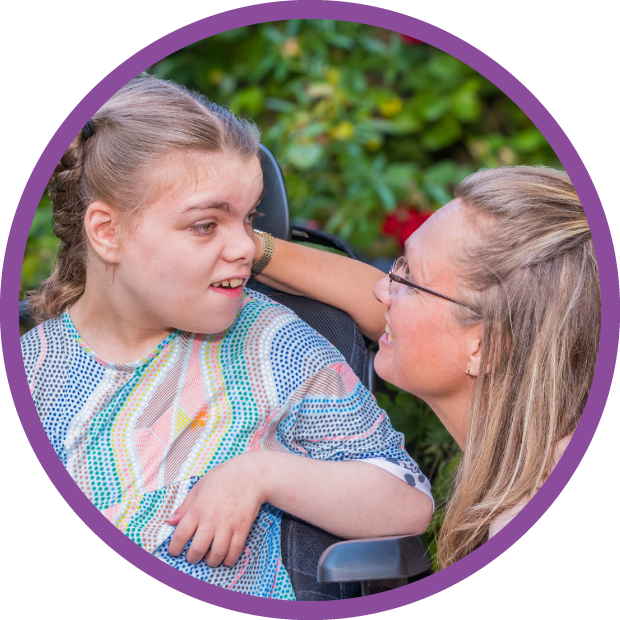
This course is for practitioners and carers working with children and young people aged 0–25 who have complex communication needs, including those with profound and multiple learning differences (PMLD) and autistic children and young people with a high level of need.
This course offers practical, neuro-affirming, Total Communication approaches to support children and young people with complex needs requiring a high level of individualised support.
The course is suitable for professionals and carers working in education, health, care and family contexts, in specialist settings and may be appropriate for some children placed in mainstream settings but who have a high level of need and access to an individualised curriculum.
Course Content
Over eight sessions, you will explore:
Explore the stages of communication development from pre-intentional to intentional communication and know what is involved in a Total Communication Approach.
Learn how to evaluate the learning environment, setting routines and personal interaction to support communication through a person-centred approach. Explore sensory processing and know more about supporting sensory needs.
Develop understanding of pre-intentional communication and learn how to respond consistently to gestures, vocalisations, movement and sensory responses to build shared meaning and connection.
Explore how anticipation, routines and joint attention support engagement and communication. Learn how predictable structures can reduce uncertainty and support participation.
Understand how communication becomes intentional and how to extend it using the Means, Reasons and Opportunities framework, with a focus on choices, interaction and functional communication.
Explore different pathways to language development, including Analytical and Gestalt Language Processing. Learn how to recognise, value and develop echolalia, and how to adapt interaction, play and AAC in neuro-affirming ways to meet the communication needs of speaking and non-speaking autistic children and young people.
Understand how sensory, schematic, symbolic and social play underpin communication across all ages. Learn how to support differences in play and exploratory learning.
Bring learning together to extend meaningful communication. Explore Communication Passports, First Messages and strategies to support the early stages of understanding spoken language and expressing thoughts, ideas and needs through talking and/or AAC.
Why Schools Choose Elklan
Elklan is the UK’s leading provider of training on speech, language and communication, created and delivered by qualified Speech and Language Therapists and Specialist Teaching Advisors
More than 100,000 practitioners have already gained Elklan accreditation, making a difference nationwide
Evidence-based, practical, neuro-affirming and person-centred courses and resources many of which can be implemented immediately
Builds staff confidence and consistency in supporting SLCN
Improves attainment, wellbeing and inclusion outcomes
Forms part of the Elklan Communication Friendly Settings (CFS) pathway
Learning Outcomes
Participants will:
- Develop the confidence and understanding to observe, interpret and respond to communication in all its forms and at all stages from pre-intentional to early intentional communication
- Know how to use a person-centred, Total Communication Approach to support connection and engagement
- Be able to evaluate and implement small changes to the learning environment, routines, personal interaction and practice that will make a difference to the children and young people
- Increase the Means, Reasons and Opportunities children and young people have to communicate their choices, needs and interests
Course Structure and Accreditation
- 8 sessions usually weekly or bi-weekly
- Delivered face-to-face or online by trained Elklan tutors
- Includes the Communication Builders for Complex Needs coursebook
- Leads to Level 2 or Level 3 Award in 'Communication Support for 0-25s with Complex Needs' (accredited by OCN London).
Available courses
Accredited Online Training
Compare the options
|
|
|
|
|---|---|---|
Online Training |
e-learning sessions |
|
| Targeted strategies for specific age range |
|
|
| Communication Builders for Complex Needs |
e-book |
e-book |
| Anytime access to the e-learning sessions |
Ten weeks |
Twelve weeks |
| Teaching from an Elklan Tutor | ||
| Discuss and share with other learners |
|
|
| External accreditation with a 9 credit Award on successful completion |
|
|
| Learning log to complete online |
|
|
| Time commitment per course for all aspects | 4-4½ hours total per week* | 1-1½ hours per week |
| £435 plus VAT |
£310 |
|
| Find upcoming courses | Purchase now | |
|
*This is an accredited course and so you will need to actively engage with the training and complete a learning log. To do this you should expect to set aside around 4½ hours weekly. This will include:
|
Further training opportunities
NEW! CPD Workshops
We offer a range of one-hour CPD workshops over one or two sessions designed specifically for Elklan-trained practitioners working in Early Years and Key Stages 1 and 2.
Let's Talk courses for parents and carers
If you achieve a level 3 qualification in Communication Support for 0-25s with Complex Needs, you can train to deliver Let's Talk with Special Children to parents and carers of children with speech and language needs in your school. Following a one-day course, you'll be qualified as a Let's Talk Tutor, able to cascade the Let's Talk course under licence.
Communication Friendly Settings (CFS)
Communication Support for 0-25s with Complex Needs is an essential first step for your school to achieve Communication Friendly Setting status. If you are a TA, you need to complete the level 3 qualification; if you are a teacher, then you can access the non-accredited e-learning sessions, which will prepare you to complete a level 4 learning log at the next stage.
Specialist Courses
These courses are ideally suited for you if you have completed an eight- or ten-session core course and wish to take your learning further.